
Description
Product Overview
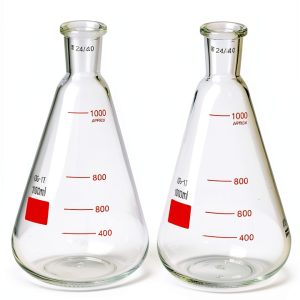
![[Product front view showing all components]](https://www.orvito.store/wp-content/uploads/2026/07/8e48c32b1be7471cada4e4a08eba2647.jpg)
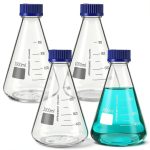
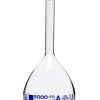
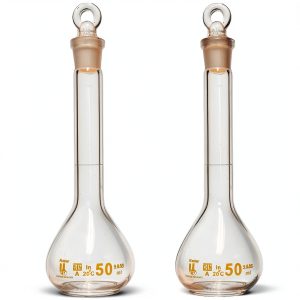
The EISCO 2000ml volumetric flask is engineered to deliver laboratory‑grade precision and durability for a wide range of scientific applications. Manufactured from high‑quality borosilicate 3.3 glass, the vessel resists thermal shock and chemical corrosion, ensuring reliable performance even under demanding experimental conditions. The flask conforms to ASTM E288 Class A specifications, a benchmark that guarantees volumetric accuracy within tight tolerances for quantitative analysis. A secure polypropylene stopper with a 29/32 thread provides an airtight seal, preventing evaporation and contamination while allowing easy opening and closing during routine use. The clear glass body offers excellent visibility of liquid levels, facilitating quick visual checks and reducing the need for auxiliary measuring devices. With overall dimensions of 6 × 6 × 15 inches and a weight of approximately one pound, the flask balances a compact footprint with sufficient capacity for large‑scale titrations and calibrations.
The flask’s neck is carefully ground to a uniform thickness, reducing the risk of breakage during handling and ensuring consistent optical clarity for precise meniscus reading. A graduated scale etched onto the glass surface is calibrated at the 2000 ml mark, allowing users to verify the flask’s volume accuracy with a simple water fill test. The flask’s base is reinforced with a slightly thicker glass rim, providing stability on laboratory benches and reducing the chance of tipping during experiments. All components are manufactured in a clean‑room environment to minimize particulate contamination, a critical consideration for analytical procedures that demand high purity. The flask’s transparent design also facilitates easy identification of color changes, precipitation, or phase separation, enabling rapid assessment of reaction progress without opening the vessel. Its 1‑pound weight strikes a balance between portability and robustness, allowing technicians to transport the flask between workstations without compromising structural integrity. The flask complies with international safety standards, making it suitable for use in regulated environments where compliance documentation is required. Its clear glass also allows for easy visual inspection of the stopper’s seal integrity, helping users detect any leakage before commencing critical measurements. Overall, the EISCO 2000 ml volumetric flask combines scientific rigor with practical usability, delivering a reliable tool that meets the demanding expectations of modern laboratories.
The flask’s optical clarity is achieved through a refined annealing process that eliminates internal stresses, resulting in a glass surface free of bubbles and inclusions. Such a pristine glass matrix not only enhances visual inspection but also contributes to the chemical inertness of the container, preventing unwanted interactions with sample solutions. The flask’s neck is designed with a tapered profile that facilitates easy insertion and removal of the stopper while maintaining a consistent seal pressure across the joint. A subtle etched graduation line at the 2000 ml mark provides a reference point for quick verification, eliminating the need for external calibration tools in routine applications. The flask’s base is engineered with a flat, stable platform that distributes weight evenly, reducing the likelihood of wobble on uneven laboratory benches. In addition, the flask’s exterior is treated with a light anti‑scratch coating, which helps preserve its pristine appearance even after frequent handling. All these design considerations combine to deliver a volumetric flask that not only meets but exceeds the expectations of discerning scientists seeking reliability and precision. The flask’s compatibility with standard laboratory cleaning protocols, including acid washing and autoclaving, ensures that it can be maintained without compromising its structural integrity. When used in conjunction with calibrated temperature probes, the flask’s thermal stability allows for accurate temperature‑dependent volume measurements, a critical factor in kinetic studies. The transparent nature of the borosilicate glass also facilitates the observation of colorimetric changes, supporting qualitative analyses that rely on visual indicators. Overall, the combination of material excellence, precise engineering, and user‑centric features makes this flask a versatile asset across a spectrum of scientific disciplines.
Usage
Designed for professional laboratories, the flask is equally suitable for university chemistry classrooms, research institutes, and well‑equipped home laboratories. Its robust construction allows it to withstand repeated heating cycles, making it ideal for procedures that involve boiling, reflux, or sterilization. The polypropylene stopper can tolerate temperatures up to 150 °C, providing flexibility for both low‑temperature storage and high‑temperature processing. When used in analytical chemistry, the flask’s precise 2000 ml volume enables accurate preparation of standard solutions, dilution series, and calibration curves. In educational settings, students benefit from the clear visual cues that simplify learning concepts such as molarity, solution preparation, and volumetric measurement. For home science enthusiasts, the flask offers a reliable tool for hobbyist experiments, from small‑scale acid‑base titrations to crystal growth demonstrations.
The flask’s ability to maintain volume accuracy after repeated cycles of heating and cooling makes it a preferred choice for protocols involving successive titrations and standardization procedures. When paired with a calibrated pipette, the flask enables the preparation of solutions with exact concentrations, reducing systematic errors in experimental results. Its polypropylene stopper is chemically inert, ensuring that no leaching occurs even when the flask is used with aggressive reagents such as strong acids or bases. The flask can be safely stored in a standard laboratory glassware cabinet, as its robust glass construction tolerates minor impacts and accidental knocks. For field work, the compact size and lightweight design allow researchers to transport the flask in portable kits without sacrificing measurement precision. In quality control laboratories, the flask’s consistent performance supports routine calibration of analytical instruments, contributing to compliance with ISO and GMP standards.
The clear glass also aids in detecting precipitation or turbidity, enabling quick visual assessment of reaction completeness before proceeding to downstream steps. When used in educational demonstrations, the flask’s visible volume markings help students grasp the concept of volumetric accuracy through hands‑on experience. Its compatibility with standard laboratory accessories, such as ring stands and clamps, ensures seamless integration into existing experimental setups.
The flask’s design also accommodates the use of magnetic stir bars, allowing for homogeneous mixing of solutions without the need to transfer contents to separate vessels. Its ability to retain volume accuracy after multiple cycles of heating and cooling makes it suitable for protocols involving reflux or distillation where precise volume control is essential. For microbiology applications, the flask can be sterilized in an autoclave at 121 °C for 15 minutes, after which it remains chemically inert and free of residual contaminants. The polypropylene stopper’s low permeability ensures that volatile compounds remain sealed, preserving sample integrity during extended storage periods. In field research, the flask’s lightweight construction allows scientists to carry multiple units for parallel sample collection, streamlining data acquisition across diverse sites. The clear glass also aids in detecting any particulate contamination introduced during sampling, enabling immediate corrective action before analysis. When integrated into automated liquid handling systems, the flask’s standardized dimensions facilitate robotic gripping and precise positioning, enhancing throughput in high‑volume laboratories. Its compatibility with standard laboratory racks ensures that the flask can be stored vertically, optimizing space utilization in crowded workspaces. Overall, the flask’s versatility across temperature ranges, chemical environments, and operational settings makes it a cornerstone piece of equipment for any scientific workflow.
Why Choose Us
EISCO’s commitment to quality control ensures that each volumetric flask undergoes rigorous testing for dimensional accuracy, glass integrity, and stopper performance before leaving the factory. The use of borosilicate 3.3 glass, a material renowned for its low coefficient of thermal expansion, minimizes volume changes caused by temperature fluctuations, a critical factor for high‑precision work. Our polypropylene stoppers are manufactured to exacting standards, providing a tight seal that resists chemical attack from acids, bases, and organic solvents commonly encountered in laboratory environments. The flask’s design incorporates a calibrated neck and a clear graduation mark, allowing users to verify volume accuracy at a glance without the need for additional calibration equipment. EISCO provides responsive customer support and a comprehensive warranty that covers manufacturing defects, giving laboratories confidence in the long‑term reliability of their glassware inventory.
EISCO’s manufacturing process incorporates automated glass blowing and precision machining, which reduces human error and ensures uniform wall thickness across each flask. Each batch undergoes statistical quality analysis, with tolerance levels set tighter than industry norms to guarantee that every flask meets the declared volume within ±0.1 %. The company provides detailed calibration certificates upon request, allowing laboratories to document compliance with internal SOPs and external audit requirements. Our technical support team is available 24 hours a day, offering guidance on proper handling, cleaning procedures, and troubleshooting any performance concerns that may arise. EISCO also offers a flexible return policy and replacement program, ensuring that any defective units are swiftly addressed to minimize laboratory downtime.
EISCO’s supply chain incorporates rigorous vendor qualification processes, ensuring that raw materials such as borosilicate glass and polypropylene are sourced from reputable manufacturers with proven track records. The company’s continuous improvement program leverages customer feedback to refine product designs, resulting in incremental enhancements that keep the flask aligned with evolving laboratory standards. Environmental responsibility is also a priority; the manufacturing process minimizes waste and utilizes recyclable materials wherever possible, reflecting EISCO’s commitment to sustainable laboratory practices. Technical documentation, including detailed material safety data sheets (MSDS) and user manuals, is provided in multiple languages, facilitating global deployment and compliance with regional regulations. By choosing EISCO, laboratories benefit from a proven track record of reliability, as reflected in the product’s high customer rating of 4.3 stars across numerous reviews.
Key Features
- Precise 2000 ml volume calibrated to ASTM Class A for accurate solution preparation and quantitative analysis.
- Durable borosilicate 3.3 glass resists thermal shock and chemical corrosion, extending the flask’s service life.
- Secure polypropylene stopper with 29/32 thread provides an airtight seal, preventing evaporation and contamination.
- Clear glass body offers excellent visibility of liquid levels, simplifying visual checks and reducing measurement errors.
- EISCO’s dedicated after‑sales service includes technical assistance and warranty coverage, ensuring reliable support throughout the product’s lifespan.
Performance & Maintenance
The flask’s thermal expansion coefficient of 3.3 × 10⁻⁶ /°C ensures minimal volume change across a wide temperature range, supporting accurate measurements in both heated and cooled environments. Repeated heating cycles up to 150 °C have been tested without observable deformation, confirming the glass’s resilience under demanding laboratory protocols. The polypropylene stopper maintains its sealing performance after more than 50 opening‑closing cycles, providing long‑term reliability for routine laboratory use. When exposed to aggressive chemicals such as concentrated hydrochloric acid or sodium hydroxide, neither the glass nor the stopper exhibits degradation, preserving the flask’s integrity.
For optimal longevity, it is recommended to avoid sudden temperature shocks, such as immersing a hot flask directly into cold water. Cleaning should be performed using non‑abrasive materials; abrasive pads can scratch the glass surface and compromise visual clarity. After cleaning, the flask should be stored in a dust‑free cabinet with the stopper loosely placed to allow airflow and prevent moisture buildup. The flat base design enables stable stacking of multiple flasks, maximizing storage efficiency while minimizing the risk of breakage. Routine inspection of the stopper’s thread is advised; any wear should be addressed by replacing the stopper to maintain a proper seal. The flask’s clear graduation line also serves as a quick reference for verifying the integrity of the volume after cleaning cycles. In high‑throughput laboratories, the flask’s compatibility with robotic handling systems reduces manual handling time and improves reproducibility. Overall, the combination of thermal stability, chemical resistance, and durable sealing mechanisms ensures that the flask delivers consistent performance throughout its service life.
FAQ
What is the accuracy tolerance of the 2000 ml volumetric flask?
The flask is calibrated to ASTM E288 Class A specifications, which guarantee a volume tolerance of ±0.1 % at 20 °C. This means the measured volume will not deviate more than two milliliters from the nominal 2000 ml value, providing the precision required for quantitative analytical work and standard solution preparation.
Can the flask be autoclaved for sterilization?
Yes, the flask can be safely autoclaved at 121 °C for up to 15 minutes. The borosilicate 3.3 glass tolerates the high temperature without deformation, and the polypropylene stopper retains its sealing properties after repeated cycles, ensuring sterility without compromising volume accuracy.
What cleaning procedures are recommended for this flask?
Routine cleaning should involve rinsing with distilled water followed by a mild acid wash, such as a 5 % nitric acid solution, to remove residues. After cleaning, the flask should be thoroughly rinsed with deionized water and allowed to air‑dry. The polypropylene stopper can be cleaned with warm soapy water and inspected for wear before reuse.
Is the flask compatible with standard laboratory racks and stands?
The flask’s dimensions of 6 × 6 × 15 inches conform to common laboratory glassware standards, allowing it to fit securely in standard racks, ring stands, and clamp systems. Its flat base provides a stable platform, and the tapered neck ensures easy attachment of the stopper without interfering with rack slots.

 Hidden Wisdom New Age Self-Help Kindle eBook – 58‑Page Guided Insight
  Deekin PVC Hockey Ball Adult Roller Hockey Puck
Reviews
There are no reviews yet.